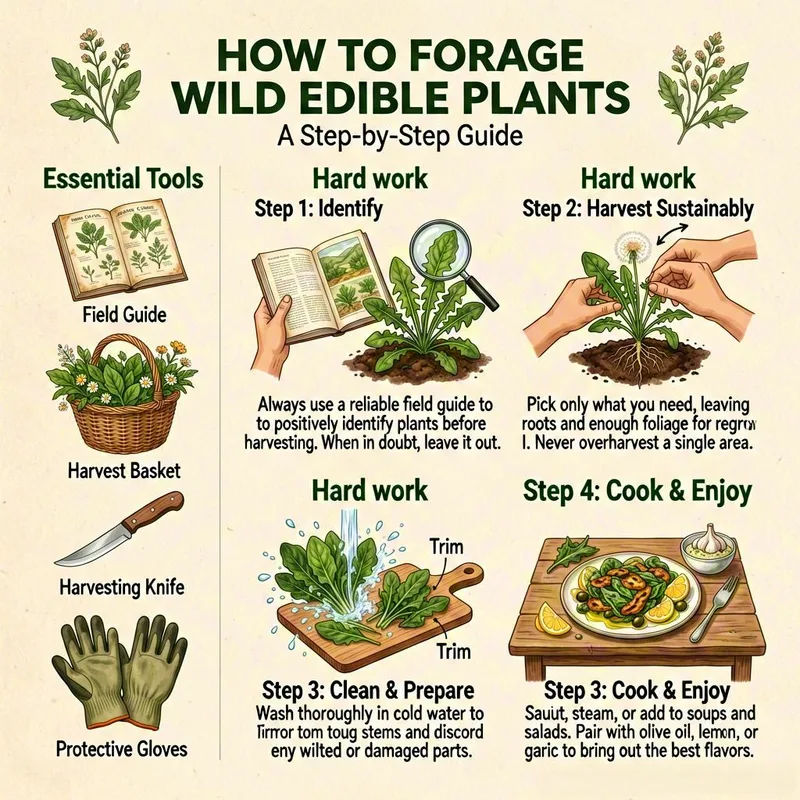
🌿 How to Forage Wild Edible Plants
A step-by-step guide to safe and sustainable foraging.
Inspired by the ancient Italian tradition of alimurgia.
Explore 314+ wild edible plants — nutritional data, safety info, recipes, and harvesting guides from around the world.
Filter and search through our complete plant database.
Know what to forage when — your guide to harvest seasons.
Peak time for tender greens and shoots. Look for nettles, wild asparagus, dandelions, and young leaves emerging.
Berries, flowers, and fruits are abundant. Harvest elderberries, wild garlic seeds, and many leafy greens still available.
Nut gathering season plus late mushrooms and berries. Roots become sweeter after first frosts.
Hardy evergreens and roots available. Look for winter cress, dock roots, and evergreen herbs for teas.
A step-by-step guide to safe and sustainable foraging.
Inspired by the ancient Italian tradition of alimurgia.
Always follow these rules when foraging.
Never eat a plant unless you can positively identify it using at least 3 independent sources. Some toxic plants have deadly lookalikes.
When trying a new edible for the first time, eat only a small amount and wait 24 hours to check for allergic reactions or sensitivity.
Avoid plants from roadsides, industrial areas, or sprayed farmland. Collect at least 50 meters away from any road or pollution source.
Wild edible foraging is the practice of identifying, gathering, and eating plants that grow naturally in the wild — without cultivation. It's an ancient practice being rediscovered for its connection to nature, nutritional benefits, and sustainability.
Always use the Universal Edibility Test: identify positively with multiple sources, check for known toxic look-alikes, start with a tiny amount, wait 24 hours, and look for any adverse effects. This website provides safety data for each plant, but always cross-reference.
The best places are forests edges, meadows, abandoned agricultural fields, and clean woodland areas. Always avoid roadside shoulders, industrial areas, sprayed farmland, and protected nature reserves. Get permission before foraging on private land.
The rule of three states you should never eat a plant unless you can confirm its identity through at least 3 different reliable sources — for example: a field guide, an experienced forager, and a botanical key. This dramatically reduces the risk of misidentification.
Many wild plants are significantly more concentrated in nutrients like vitamins, minerals, and antioxidants than their cultivated counterparts. For example, wild nettle contains much more iron and vitamin C than spinach. However, nutritional content varies by soil, season, and species.
Preparation methods vary by plant. Common techniques include boiling (to reduce bitterness and oxalates), sautéing, adding to soups, making pesto, drying for tea, or pickling. Each plant in our database includes specific preparation tips, culinary uses, and recipe suggestions.
Foraging laws vary by country and region. In Italy, many regions require permits for commercial foraging. In national parks and nature reserves, plant collection is often prohibited. Always check local regulations before foraging, and never take more than you need.
Fresh greens should be used within a few days or frozen. Roots and nuts can be dried for long-term storage (6–12 months). Many leaves can be dried for teas. Always store in airtight containers away from light and moisture. Specific storage tips are listed for each plant.
Two spring plants — one edible, one deadly. Learn to tell them apart.
Wild garlic vs supermarket lemon — we check the numbers.
Portulaca oleracea packs surprising omega-3 levels.