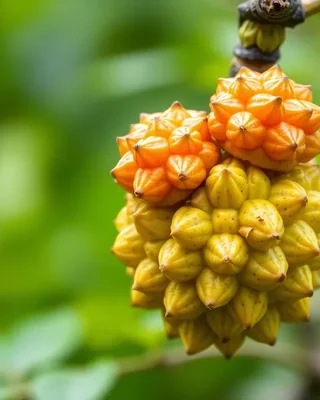
Cupuaçu

Theobroma grandiflorum — Malvaceae

Italiano: Cupuaçu
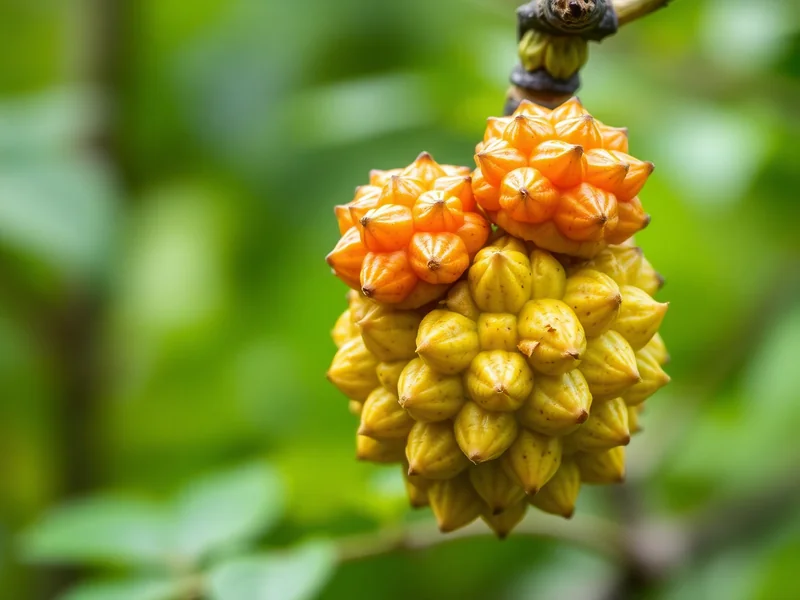
cupuaçu

Description

Cupuaçu (Theobroma grandiflorum) belongs to the Malvaceae family and is native to SouthAmerica. It thrives in Amazon rainforest, Atlantic forest environments across regions including SouthAmerica.

Botanically, Cupuaçu is large Amazonian tree related to cacao, producing melon-sized brown fruits with creamy aromatic pulp..

The edible parts include Fruit pulp, Seeds. With an edibility rating of 7/10, it ranks as a good wild food source. Harvesting is best done during December, February, January, March, November and October.

Nutritionally, Cupuaçu stands out for its Vitamin K (30.0mg, 25% DV), Vitamin C (20.0mg, 22% DV) and Vitamin E (1.0mg, 7% DV). It also provides 2.0g protein and 3.0g dietary fiber per 100g serving.

In the kitchen, Cupuaçu offers a Chocolate-pineapple-citrus, creamy, aromatic flavor profile. Break fruit; scoop creamy pulp; ferment seeds for cupulate. Common culinary applications include Fresh pulp, Cupulate (chocolate-like), Juice, Ice cream, Butter. Popular preparations include Blend pulp with milk and sugar for juice; make cupulate from seeds.

For storage, refrigerate fresh parts.

Safety note: Contains theobromine (like chocolate); moderate quantities. Antinutrient content is minimal. Be aware that Verify identification before consumption. Safe lookalike species include Similar edible species. Always verify identification with at least three independent botanical sources before consumption.

Foragers should collect cupuaçu during Jan, Feb, Mar, Oct, Nov and Dec. Choose young, vibrant parts for optimal flavor and nutrition. Avoid specimens near polluted areas, roadsides, or treated agricultural land.

Field identification relies on recognizing the plant in its natural habitat — typically amazon rainforest, atlantic forest. Flowers, leaf arrangement, and growth habit provide the most reliable identification markers. Always consult at least two independent botanical sources.

Traditional SouthAmerica communities have long valued cupuaçu as a seasonal wild food. Its reliable growth and nutritional density made it a valuable resource during lean periods and food scarcity.

In contemporary cuisine, cupuaçu pairs excellently with olive oil, garlic, and citrus. It complements wild herbs, foraged mushrooms, and hearty grains. Experiment with both raw preparations and slow-cooked dishes to appreciate its full range.

Edibility

7/10
Toxicity: Contains theobromine (like chocolate); moderate quantities
Antinutrients: Minimal
Safe lookalikes: Similar edible species
Dangerous: Verify identification before consumption

Harvest Calendar

JanFebMarAprMayJunJulAugSepOctNovDec
Edible parts: Fruit pulp, Seeds
Preparation: Break fruit; scoop creamy pulp; ferment seeds for cupulate
Flavor: Chocolate-pineapple-citrus, creamy, aromatic

Nutrition (per 100g)

Protein: 2.0g
Fat: 0.5g
Fiber: 3.0g
Vitamin C: 20.0mg (22%DV)
Vitamin A: 50mcg (5%DV)
Vitamin E: 1.0mg (6%DV)
Vitamin K: 30mcg (25%DV)
Folate (B9): 20mcg (5%DV)
Calcium: 30.0mg (2%DV)
Iron: 1.0mg (5%DV)
Magnesium: 20mg (4%DV)
Potassium: 200mg (4%DV)
Zinc: 0.3mg (2%DV)

Culinary Uses

Fresh pulp, Cupulate (chocolate-like), Juice, Ice cream, Butter

Storage

Refrigerate fresh parts

Recipes

  • Blend pulp with milk and sugar for juice; make cupulate from seeds

Where It Grows

Continent: SouthAmerica
Regions: SouthAmerica
Habitat: Amazon rainforest, Atlantic forest