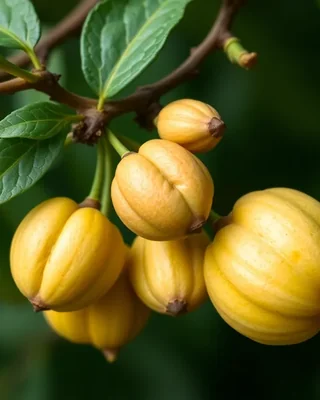
Anacardio selvatico / Marañón
Anacardium occidentale — Anacardiaceae
English: Wild Cashew
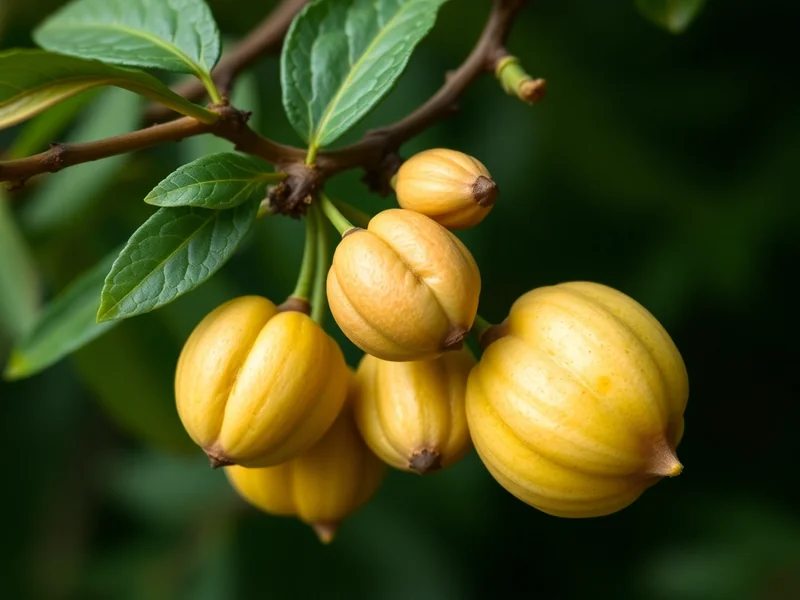
Descrizione
Tropical American tree producing a kidney-shaped nut atop a fleshy red or yellow cashew apple (pseudofruit). Both edible.
Edabilità
7/10
Toxicity: Raw nut shell contains caustic urushiol; NEVER crack raw with bare hands; must be roasted or steamed before shelling
Antinutrients: Minimal
Safe lookalikes: Similar edible species
Dangerous: Verify identification before consumption
Calendario Raccolta
GenFebMarAprMagGiuLugAgoSetOttNovDic
Edible parts: Noci, Mela di anacardio (frutto)
Preparation: Roast whole nuts to destroy shell toxins; crack; cashew apple: eat fresh or juice
Flavor: Nuts: rich, creamy; cashew apple: sweet, astringent, fruity
Nutrizione (per 100g)
Proteine: 4.0g
Grassi: 0.5g
Fibre: 3.0g
Vitamina C: 45.0mg (50%DV)
Vitamina A: 50mcg (5%DV)
Vitamina E: 1.0mg (6%DV)
Vitamina K: 30mcg (25%DV)
Folato (B9): 20mcg (5%DV)
Calcio: 30.0mg (2%DV)
Ferro: 1.0mg (5%DV)
Magnesio: 20mg (4%DV)
Potassio: 200mg (4%DV)
Zinco: 0.3mg (2%DV)
Usi Culinari: Roasted nuts, Cashew juice, Fermented drinks, Jams Conservazione: Refrigerate fresh parts
Ricette
- Roast nuts in fire; crack shell; eat cashew apple fresh or juice it
Dove Cresce
Continente: SouthAmerica
Regioni: SouthAmerica
Habitat: Coastal forest, dry tropical forest, cerrado edges
Importante: Verifica sempre l'identificazione della pianta prima del consumo.
Questo contenuto è solo a scopo informativo. Consulta fonti attendibili e esperti prima
di mangiare qualsiasi pianta selvatica. Un'identificazione errata può essere pericolosa.