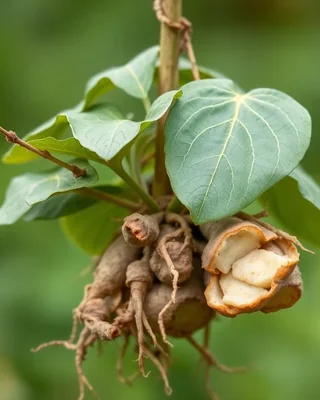
Manioca selvatica / Yuca
Manihot esculenta subsp. flabellifolia — Euphorbiaceae
English: Wild Cassava
Descrizione
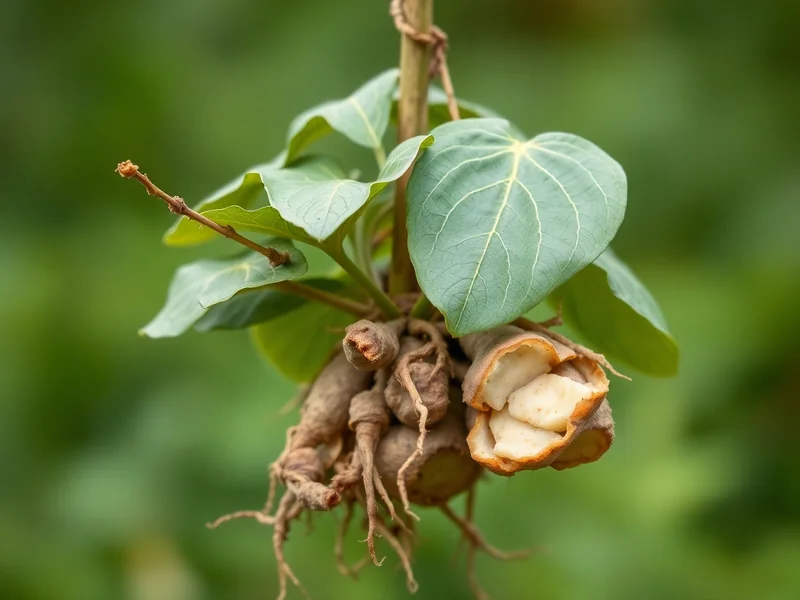
Wild ancestor of cultivated cassava, producing large starchy roots that MUST be processed to remove toxic cyanogenic compounds.
Edabilità
6/10
Toxicity: RAW ROOT CONTAINS CYANIDE PRECURSORS; MUST be peeled, grated, soaked, fermented, or cooked thoroughly to be safe
Antinutrients: Minimal
Safe lookalikes: Similar edible species
Dangerous: Verify identification before consumption
Calendario Raccolta
GenFebMarAprMagGiuLugAgoSetOttNovDic
Edible parts: Radici (trattate), Foglie (cotte)
Preparation: Peel; grate; soak/ferment in water for days; press out liquid; roast
Flavor: Mild starchy, neutral; takes on flavors of cooking
Nutrizione (per 100g)
Proteine: 2.0g
Grassi: 0.5g
Fibre: 3.0g
Vitamina C: 45.0mg (50%DV)
Vitamina A: 50mcg (5%DV)
Vitamina E: 1.0mg (6%DV)
Vitamina K: 30mcg (25%DV)
Folato (B9): 20mcg (5%DV)
Calcio: 30.0mg (2%DV)
Ferro: 1.0mg (5%DV)
Magnesio: 20mg (4%DV)
Potassio: 200mg (4%DV)
Zinco: 0.3mg (2%DV)
Usi Culinari: Boiled roots, Fried (yuca frita), Flour (tapioca), Stews Conservazione: Refrigerate fresh parts
Ricette
- Ferment grated root in water; press; roast into farinha
Dove Cresce
Continente: SouthAmerica
Regioni: SouthAmerica
Habitat: Amazon forest edges, Cerrado, disturbed ground
Importante: Verifica sempre l'identificazione della pianta prima del consumo.
Questo contenuto è solo a scopo informativo. Consulta fonti attendibili e esperti prima
di mangiare qualsiasi pianta selvatica. Un'identificazione errata può essere pericolosa.